
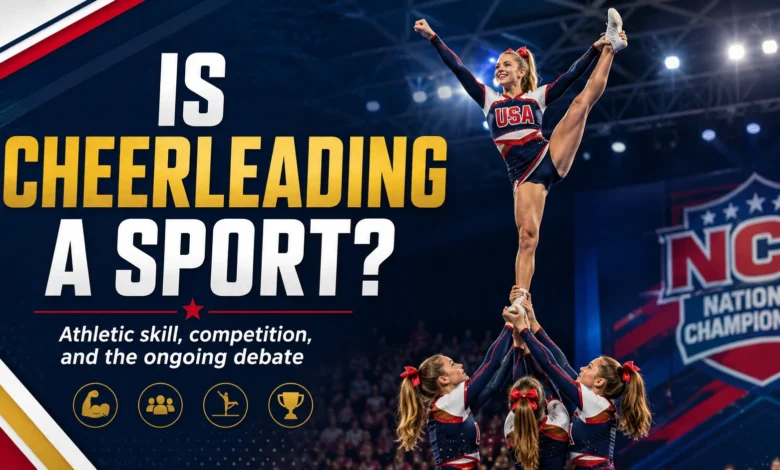
The question “Is cheerleading a sport?” has been debated for many years. Some people consider cheerleading an athletic activity because its traditional role is to support other sports teams, while others argue that cheerleading requires the same level of strength, skill, training, and dedication as many recognized sports.
The answer depends on the type of cheerleading being discussed. Traditional sideline cheerleading and competitive cheerleading are not exactly the same. Competitive cheerleading involves structured routines, scoring systems, intense training, and competitions, which are the same elements found in many other sports.
What Is Cheerleading?
Cheerleading is a team activity that combines elements of gymnastics, dance, acrobatics, and performance. Cheerleaders perform routines that may include:
- Tumbling
- Jumps
- Stunts
- Pyramids
- Dance movements
- Choreographed cheers
Originally, cheerleading was mainly created to encourage sports teams and entertain crowds during games. However, modern cheerleading has developed into a competitive activity where teams train and compete against each other.
Competitive cheerleading involves athletes performing routines that are judged based on factors such as difficulty, execution, synchronization, and overall performance.
What Makes Something a Sport?
To understand whether cheerleading is a sport, it is important to define what a sport usually requires.
Most recognized sports include:
Physical Activity
Athletes must use physical strength, endurance, flexibility, or coordination.
Skill Development
Participants need training and practice to improve their abilities.
Competition
Teams or individuals compete against opponents.
Rules and Scoring
Sports usually have standardized rules and a system for determining winners.
Organized Structure
Sports typically have coaches, teams, competitions, and governing organizations.
When these factors are considered, competitive cheerleading meets many of the traditional requirements of a sport.
Why Cheerleading Is Considered a Sport
1. Cheerleading Requires Significant Physical Ability
One of the biggest reasons people argue that cheerleading is a sport is because of its physical demands.
Competitive cheerleaders need:
- Strength to perform lifts and stunts
- Flexibility for jumps and movements
- Balance during complex routines
- Endurance for full performances
- Coordination with teammates
A cheerleader performing a difficult routine is using many athletic skills similar to gymnasts, dancers, and other sports athletes.
Stunts and pyramids require trust, timing, and physical control. A small mistake can lead to serious injuries, showing the athletic difficulty involved.
2. Cheerleaders Train Like Other Athletes
Many people underestimate the amount of training involved in cheerleading.
Competitive cheerleaders often spend hours practicing:
- New skills
- Choreography
- Strength conditioning
- Flexibility exercises
- Safety techniques
Like athletes in football, basketball, or gymnastics, cheerleaders must continuously improve their performance.
Training is not only physical. Cheerleaders also need mental focus because routines require perfect timing and teamwork.
3. Competitive Cheerleading Has Rules and Competitions
Competitive cheerleading is not simply performing for entertainment. Teams compete against one another under organized rules.
Competitions evaluate teams based on:
- Difficulty of skills
- Execution
- Creativity
- Synchronization
- Overall performance
Judges use scoring systems to determine winners, similar to sports such as gymnastics, diving, and figure skating.
This competitive structure is one of the strongest arguments supporting cheerleading as a sport.
4. Cheerleading Requires Teamwork
Like many team sports, cheerleading depends on cooperation.
Every member has an important role:
- Flyers perform movements in the air
- Bases provide support and stability
- Spotters help maintain safety
- Other team members contribute to timing and choreography
A successful routine requires communication, trust, and teamwork.
Why Some People Say Cheerleading Is Not a Sport
Although many people support recognizing cheerleading as a sport, there are also arguments against it.
1. Traditional Cheerleading Is Often About Supporting Other Teams
The biggest argument against cheerleading is related to traditional sideline cheer.
Many cheer squads exist primarily to:
- Encourage athletes
- Lead crowd participation
- Support school teams
Critics argue that because the main purpose is not always competition, traditional cheerleading does not fit the definition of a sport.
However, this argument usually focuses on sideline cheerleading rather than competitive cheerleading.
2. Recognition Problems
Another reason for the debate is that cheerleading has not received the same level of recognition as traditional sports.
Organizations and schools have different rules for classifying cheerleading. For example, some athletic organizations recognize competitive cheer while others do not.
The classification matters because official recognition can affect:
- Funding
- Coaching resources
- Athletic support
- Scholarships
3. Judging Can Be Subjective
Some critics argue that cheerleading competitions rely on judges, making results less objective.
However, several recognized sports also use judging systems, including:
- Gymnastics
- Figure skating
- Diving
Therefore, subjective scoring alone does not necessarily mean an activity is not a sport.
Competitive Cheerleading vs Sideline Cheerleading
Understanding the difference between these two types of cheerleading helps explain why the debate exists.
| Competitive Cheerleading | Sideline Cheerleading |
| Focuses on competitions | Focuses on supporting teams |
| Uses scoring systems | Usually has no competitive scoring |
| Teams compete against each other | Performs during games |
| Requires advanced athletic routines | Focuses on crowd engagement |
| Trains specifically for events | Supports school athletics |
Competitive cheerleading is much closer to traditional sports because competition is its primary purpose.
Is Competitive Cheerleading a Sport?
For many people, the answer is yes.
Competitive cheerleading includes:
- Athletes
- Coaches
- Training programs
- Rules
- Competitions
- Championships
- Physical skills
It combines athletic ability with teamwork and performance. Many sports-related stories show how dedication, discipline, and teamwork shape the lives of athletes and the people connected to competitive sports.
The International Olympic Committee has also recognized cheerleading’s international governing body, increasing global recognition of the activity.
How Difficult Is Cheerleading Compared to Other Sports?
Cheerleading is often compared with sports such as gymnastics because both require:
- Flexibility
- Balance
- Strength
- Precision
- Body control
However, cheerleading has unique challenges because athletes must perform while depending on teammates.
For example, a basketball player controls their own movements, but a flyer in cheerleading depends on bases and spotters to safely complete stunts.
This teamwork creates a different type of athletic challenge.
Is Cheerleading Dangerous?
Like many sports, cheerleading carries injury risks. Similar to other physical activities, injuries can occur when athletes participate without proper preparation, safety measures, or training.
Common injuries can include:
- Sprains
- Fractures
- Muscle injuries
- Falls from stunts
Proper coaching, safety rules, and appropriate training are important to reduce risks. Because of the physical demands and potential injuries, many organizations argue that competitive cheerleading should receive the same safety resources as other sports.
Benefits of Cheerleading
Beyond competition, cheerleading provides many benefits.
Physical Fitness
Cheerleading improves:
- Strength
- Flexibility
- Coordination
- Endurance
Confidence
Performing in front of audiences helps athletes develop confidence and communication skills.
Teamwork
Cheerleaders learn cooperation, responsibility, and trust.
Discipline
Regular practice teaches commitment and goal-setting.
Final
Traditional sideline cheerleading is often viewed as a support activity because its main purpose is encouraging other teams. However, competitive cheerleading has many characteristics of a sport, including physical training, organized competition, rules, scoring systems, and athletic skill.
For these reasons, many people consider competitive cheerleading a legitimate sport. While the debate over official recognition continues, there is no doubt that competitive cheerleading requires dedication, athletic ability, and teamwork at a high level.

