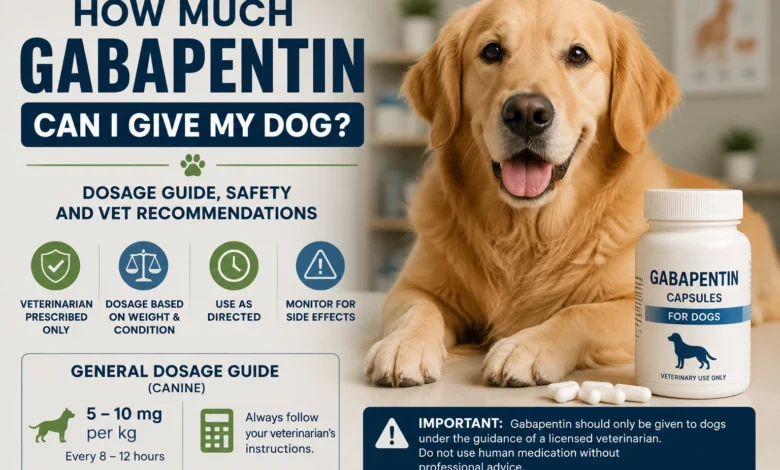
If you are wondering how much gabapentin can I give my dog, the safest answer is that the dose must be prescribed by a veterinarian. The correct amount depends on your dog’s weight, health condition, kidney function, other medications, and the reason gabapentin is being used, such as pain, seizures, or anxiety. Giving an incorrect dose may cause excessive sleepiness, poor coordination, vomiting, or other complications. Never use leftover medication or adjust the dosage without veterinary advice. Some human liquid gabapentin products also contain xylitol, an ingredient that is toxic to dogs, so always check the formulation before administering it.
Understanding Gabapentin and Its Uses in Dogs
How much gabapentin can i give my dog is a widely used medication in veterinary medicine. It helps manage several conditions including chronic pain, anxiety, and seizures. It’s important to remember that dosing depends significantly on your dog’s weight and the condition being treated.
This medication affects nerve activity to reduce pain signals and calm the nervous system. Its versatility makes how much gabapentin can i give my dog a valuable tool for veterinarians when addressing multiple health concerns.
Always use gabapentin under veterinary supervision. Incorrect dosing can lead to side effects or ineffective treatment. Knowing how much gabapentin can i give my dog will help ensure your pet’s safety and comfort.
How Is Gabapentin Dosage Determined?
The dose of how much gabapentin can i give my dog for dogs is calculated based on weight, typically expressed in milligrams per kilogram (mg/kg). This ensures each dog receives an amount tailored to their size and medical needs.
Dosage also varies depending on the condition being treated. For example, doses for chronic pain differ from those used for anxiety or seizure control. The frequency of administration plays a key role.
Veterinarians often start with a low dose and gradually increase it. This titration helps find the optimal balance between effectiveness and minimizing side effects.
Gabapentin Dose for Chronic Pain in Dogs
For managing chronic pain such as arthritis or neuropathic pain, how much gabapentin can i give my dog is commonly prescribed. The initial dose typically ranges from 5 to 15 mg/kg (2.3 to 6.8 mg/lb) every 12 hours.
If pain relief is inadequate, the dose can be gradually increased to as high as 40 mg/kg (18.1 mg/lb) every 8 to 12 hours, based on your veterinarian’s assessment. Monitoring is essential during this phase.
This methodical titration helps improve comfort while reducing the risk of side effects like sedation or ataxia, ensuring a safe, tailored pain management routine.
Gabapentin for Anxiety in Dogs: Short-Term and Long-Term Use
To help dogs with short-term anxiety, such as during storms or travel, how much gabapentin can i give my dog may be given 1 to 2 hours before the event. The short-term dose can range from 30 to 60 mg/kg (13.6 to 27.3 mg/lb).
For persistent behavioral anxiety, the approach involves lower doses administered up to three times daily. Starting around 5 to 30 mg/kg (2.3 to 13.6 mg/lb), the dose is increased gradually over weeks, usually with a 7-day interval between changes.
This approach helps reduce anxiety symptoms steadily, minimizing side effects and ensuring your dog responds well to the medication.
Gabapentin as Add-On Therapy for Seizure Control
Gabapentin is sometimes used as an adjunct to other antiepileptic drugs to aid in seizure control. The typical starting dose is 10 to 20 mg/kg (4.5 to 9.1 mg/lb) every 8 hours.
In some cases, a higher dose may be necessary for effective seizure management. However, any increase should be closely monitored by your veterinarian to avoid adverse effects.
Using gabapentin alongside other seizure medications can improve your pet’s quality of life by reducing the frequency and severity of seizures.
Dosage Charts: Easy Gabapentin Dose Calculations for Dogs
To simplify dosing, it’s helpful to refer to weight-based gabapentin dosage charts. These allow caregivers to estimate an appropriate dose based on their dog’s weight and the recommended mg/kg dosage.
There are generally three dose levels considered: low, medium, and high. Each serves different therapeutic purposes and must be used cautiously according to veterinary guidance.
Using these charts can improve accuracy and safety when administering gabapentin and reinforce following the veterinarian’s prescription instructions.
Low-Dose Gabapentin Chart (5 mg/kg)
| Dog’s Weight | Low Dose (5 mg/kg) |
|---|---|
| 5 kg | 25 mg |
| 7.5 kg | 37.5 mg |
| 10 kg | 50 mg |
| 12.5 kg | 62.5 mg |
| 15 kg | 75 mg |
| 17.5 kg | 87.5 mg |
| 20 kg | 100 mg |
| 25 kg | 125 mg |
| 30 kg | 150 mg |
| 40 kg | 200 mg |
| 50 kg | 250 mg |
| 60 kg | 300 mg |
Medium-Dose Gabapentin Chart (15 mg/kg)
| Dog’s Weight | Medium Dose (15 mg/kg) |
|---|---|
| 5 kg | 75 mg |
| 7.5 kg | 112.5 mg |
| 10 kg | 150 mg |
| 12.5 kg | 187.5 mg |
| 15 kg | 225 mg |
| 17.5 kg | 262.5 mg |
| 20 kg | 300 mg |
| 25 kg | 375 mg |
| 30 kg | 450 mg |
| 40 kg | 600 mg |
| 50 kg | 750 mg |
| 60 kg | 900 mg |
High-Dose Gabapentin Chart (30 mg/kg)
| Dog’s Weight | High Dose (30 mg/kg) |
|---|---|
| 5 kg | 150 mg |
| 7.5 kg | 225 mg |
| 10 kg | 300 mg |
| 12.5 kg | 375 mg |
| 15 kg | 450 mg |
| 17.5 kg | 525 mg |
| 20 kg | 600 mg |
| 25 kg | 750 mg |
| 30 kg | 900 mg |
| 40 kg | 1200 mg |
| 50 kg | 1500 mg |
| 60 kg | 1800 mg |
Important Safety Tips When Giving Gabapentin to Your Dog
Always follow your veterinarian’s dosing instructions to avoid potential overdose or underdose. Never change the dose without consulting a professional. Safety should be your top priority.
Monitor your dog for side effects such as excessive sedation, dizziness, or uncoordinated movements. If any unusual symptoms appear, contact your vet immediately.
Store gabapentin safely out of reach of pets and children. Keep track of doses and administration times to maintain consistent treatment and effectiveness.
Adjusting Gabapentin Dosage Over Time
Dosage adjustments usually happen gradually and under veterinary supervision. Typically, dose changes are spaced at least 7 days apart to allow your pet to stabilize on a new dose.
Regular check-ups help evaluate treatment effectiveness and determine if dosage needs adjustment. This approach maximizes benefits and minimizes risks.
Never stop gabapentin abruptly, especially for seizures or chronic conditions. Tapering off the medication slowly prevents withdrawal symptoms or worsening of symptoms.
Consult Your Veterinarian for Personalized Care
Your veterinarian will guide the appropriate dose of gabapentin tailored to your dog’s weight, condition, and response to treatment. This ensures both safety and effectiveness.
Inform your vet about any other medications your dog is taking, as gabapentin can interact with certain drugs. Professional oversight is crucial for complex cases.
Always seek professional advice before starting or changing gabapentin dosage. Your veterinarian’s expertise is key to managing your dog’s health confidently and safely. Explore more safety-focused wellbeing information and practical health guides in our Health section.
FAQs
1. Can I give gabapentin to my dog without a vet’s prescription?
No. Gabapentin should only be given when prescribed by a veterinarian. Incorrect dosing or use without supervision can be harmful.
2. How long does gabapentin take to work in dogs?
Gabapentin generally starts working within 1 to 2 hours for anxiety and may take longer for chronic pain or seizure control. Your vet will advise based on the condition.
3. Are there side effects of gabapentin in dogs?
Common side effects include sedation, lethargy, and loss of coordination. Serious side effects are rare but require prompt veterinary attention.
4. How do I store gabapentin safely?
Keep gabapentin in a cool, dry place out of reach of pets and children. Store it in its original packaging with the label intact.
5. Can gabapentin be combined with other medications?
Gabapentin may interact with other drugs. Always inform your vet about all medications your dog is taking to avoid harmful interactions.
Conclusion
Knowing how much gabapentin can i give my dog is essential for its safe and effective use. Dosage depends primarily on your dog’s weight and the health issue being treated.
Whether managing chronic pain, anxiety, or seizures, following veterinarian guidelines and using weight-based dosage charts can ensure your dog receives the right amount for relief.
Always involve your veterinarian in dosage decisions and closely monitor your dog during treatment to maintain the highest level of care and safety. Read more responsible health and wellbeing guides in our Health section.