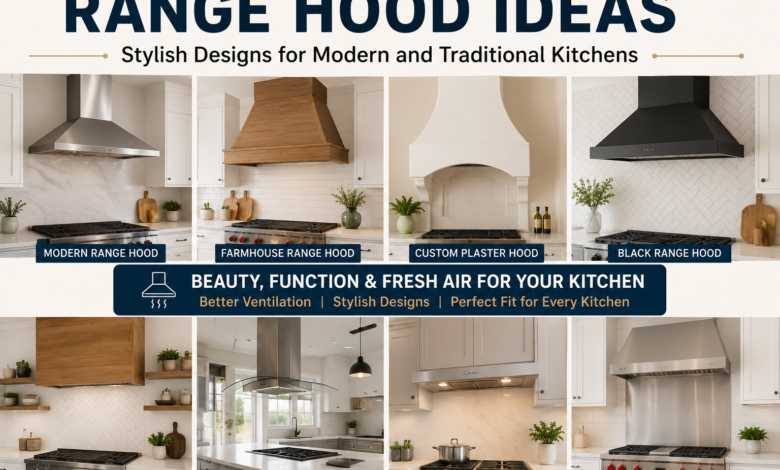
The best range hood ideas combine attractive kitchen design with practical ventilation. A range hood helps remove smoke, steam, grease, heat, and cooking odors from the air while also creating a strong visual feature above the cooktop. Whether you are planning a complete renovation or updating one kitchen area, the right hood can improve both the appearance and everyday comfort of the space.
Range hoods are available in many shapes, materials, colors, and installation styles. Some homeowners prefer a bold black metal hood, while others choose a wooden cover that blends with the cabinets. Before selecting a design, consider your kitchen size, cooking habits, ventilation requirements, ceiling height, maintenance needs, and budget. A beautiful hood should still provide safe and effective ventilation.
Why the Right Range Hood Design Matters
A range hood is often positioned in the center of the main cooking wall, which naturally makes it an important part of the kitchen design. A well-planned hood can connect the cooktop, backsplash, cabinets, countertops, and lighting. It may blend quietly into the cabinetry or become a statement feature that attracts attention as soon as someone enters the room.
Design should never replace function. The ventilation unit must be suitable for the cooktop and installed according to the appliance manufacturer’s instructions. Homeowners should also follow local building codes and safety requirements. Electrical wiring, gas appliance clearance, duct installation, and structural changes should be completed or checked by a qualified professional when necessary.
Modern Range Hood Ideas
Modern range hood designs usually feature clean lines, simple shapes, smooth surfaces, and limited decoration. Stainless steel, matte black metal, white plaster, and hidden cabinet inserts are popular options. A slim wall-mounted hood can look stylish above a modern cooktop, especially when paired with handle-free cabinets, plain countertops, and a simple backsplash.
For a softer modern look, consider a curved plaster hood or a rectangular cover painted in the same color as the walls. This creates a calm and connected appearance without making the hood disappear completely. In an open-plan kitchen, repeating the hood color in bar stools, lighting fixtures, or cabinet handles can help the whole room feel more balanced.
Farmhouse and Wooden Range Hood Ideas
Farmhouse range hood ideas often use natural wood, painted timber, decorative trim, or a simple box-style cover. A wooden hood above a cooktop can look especially attractive with white shaker cabinets, warm countertops, open shelving, and traditional hardware. Reclaimed-looking wood can add character, while painted wood provides a cleaner and more polished farmhouse appearance.
A wooden range hood cover is normally decorative and contains a proper ventilation insert inside. The wood should not block airflow or create unsafe clearance around the cooking surface. Materials and finishes should be selected carefully because heat, grease, and moisture can damage unsuitable surfaces. Installation should follow the hood manufacturer’s safety guidance and local requirements.
Stainless Steel and Black Range Hood Designs
Stainless steel is a practical choice for a busy family kitchen because its smooth surface is generally easier to wipe than textured materials. It works well with modern, industrial, and professional-style kitchens. A stainless steel hood can also connect visually with ovens, refrigerators, sinks, and other metal appliances, creating a coordinated and functional cooking area.
A black range hood creates stronger contrast and can act as a dramatic focal point. It looks especially effective with white, cream, light gray, or natural wood cabinets. Matte black finishes can feel modern, while a black hood with traditional details may suit a classic kitchen. Dark surfaces may show dust or grease, so regular cleaning remains important.
Plaster, Tile, and Custom Range Hood Ideas
Custom plaster range hood ideas are popular in Mediterranean, coastal, organic modern, and transitional kitchens. A smooth plaster hood introduces a soft architectural shape that feels less industrial than exposed metal. It can be painted to match the wall or finished in a slightly different shade to create gentle contrast above the cooking area.
Tile and brick can also be used around a decorative hood to add texture and personality. For example, a tiled surround can continue the backsplash pattern upward, while a brick finish can suit a rustic kitchen. These materials may require more cleaning because grout lines and textured surfaces can collect grease, so the ventilation system should remain easy to access.
Range Hood Ideas for Small Kitchens
In a small kitchen, a large decorative hood can make the room feel crowded. A slim wall-mounted range hood, under-cabinet model, or hidden built-in unit may be more suitable. Matching the hood color with the cabinets or walls can reduce visual heaviness and help the space appear more open and organized.
A hidden range hood inside a cabinet is useful when storage and clean design are priorities. The cabinet may match the surrounding doors, allowing the ventilation unit to remain almost invisible. However, the cabinet must be designed specifically for the insert, with correct airflow, heat protection, access for maintenance, and enough space for any required ductwork.
Island Range Hood Ideas
An island range hood is installed above a cooktop positioned in the middle of the kitchen. Because it can be viewed from every direction, its shape and finish have a major effect on the room. Stainless steel, glass, black metal, and box-style ceiling hoods are common choices for modern kitchen islands.
The hood should not feel too large or too low over the island. Ceiling height, cooktop width, sightlines, and lighting placement must all be considered. Some homeowners prefer a ceiling-integrated ventilation system for a minimal appearance, but suitability depends on the kitchen layout and performance requirements. Professional planning is especially important because island ductwork can be more complicated.
Built-In and Hidden Range Hood Ideas
Built-in range hood ideas are ideal for homeowners who want ventilation without an obvious appliance appearance. The insert can be placed inside a custom cabinet, wooden cover, plaster structure, or architectural enclosure. This makes it easier to match the hood with traditional, modern, or transitional cabinetry.
A hidden hood also allows other kitchen features to receive more attention, such as the backsplash, countertops, open shelves, or pendant lights. However, the ventilation unit must remain accessible for filter cleaning, repairs, and replacement. A beautiful cover that makes maintenance difficult can create long-term problems, so practical access should be planned before installation.
Range Hood Ideas for White and Traditional Kitchens
White kitchens provide many range hood design options. A white plaster or painted hood can create a seamless look, while black metal or natural wood can introduce contrast. In a kitchen with white shaker cabinets, a wooden range hood cover may add warmth and prevent the room from feeling too plain or cold.
Traditional kitchens often suit hoods with molding, trim, corbels, curved shapes, or cabinet-style details. These elements can coordinate with raised-panel doors and classic hardware. Decoration should remain proportionate to the kitchen size. Too many heavy details can make a small space feel crowded, while a simple framed hood may create a more timeless appearance.
How to Match a Range Hood With Kitchen Cabinets
A range hood does not always need to match the cabinets exactly. Matching colors create a calm and unified appearance, while contrasting materials make the hood a focal point. For example, a black hood can stand out against white cabinets, while a wood cover can add warmth to painted cabinetry.
Consider repeating at least one element from the kitchen in the range hood design. This may include the cabinet color, wood tone, metal finish, trim style, or shape. Repetition creates visual connection. A hood that uses completely unrelated colors and materials may look separate from the rest of the room unless contrast is planned carefully.
Choosing the Right Range Hood Size and Ventilation Type
The hood should be appropriately sized for the cooktop and cooking area. The correct size and installation height depend on the hood model, cooktop type, and manufacturer’s instructions. Avoid choosing a smaller hood only because it looks less noticeable. A unit that does not suit the cooking surface may not manage smoke, steam, and grease effectively.
Ducted range hoods generally move air outside through ductwork, while ductless models filter and recirculate air back into the kitchen. Each option has different installation and maintenance needs. The most suitable choice depends on the property, local building requirements, kitchen layout, cooking habits, and whether external ducting can be installed safely.
Range Hood Lighting and Practical Features
Built-in range hood lighting can make cooking safer and more comfortable by illuminating the cooktop. LED lighting is commonly used because it provides clear light and may require less frequent replacement. The light color should work with other kitchen lighting so the cooking area does not look unusually blue, yellow, or disconnected. Homeowners planning the cooking area can also explore these modern kitchen lighting ideas for pendant lights, LED panels, and practical home illumination.
Controls should also be easy to reach and understand. Some homeowners prefer simple buttons, while others like touch controls or remote operation. Consider noise, filter access, cleaning, and maintenance when comparing designs. Decorative appearance is important, but a hood that is difficult to operate or clean may become frustrating during everyday use.
Common Range Hood Design Mistakes
One common mistake is selecting a hood only because it matches an inspiration photo. A design that works in a large kitchen with high ceilings may overwhelm a smaller room. Another mistake is creating a decorative cover without leaving suitable space for ventilation, wiring, heat protection, ductwork, and maintenance access.
Homeowners may also choose finishes that are difficult to clean. Highly textured wood, deep trim, rough brick, and detailed molding can collect grease. Another issue is incorrect installation near a gas or electric cooktop. Always follow appliance instructions and local regulations rather than relying on general measurements found in decorating articles or social media posts.
Range Hood Cleaning and Maintenance Tips
Range hood filters collect airborne grease and should be cleaned or replaced according to the manufacturer’s guidance. Washable metal filters may require regular cleaning, especially in homes where frying and heavy cooking happen frequently. Recirculating models may use filters that need replacement rather than washing.
The outer surface should be wiped with a cleaning method suitable for its material. Stainless steel, painted wood, plaster, tile, and black metal may require different products. Avoid harsh chemicals that could damage finishes. Keeping the hood clean improves its appearance and may also help prevent grease buildup around controls, lighting, and ventilation openings.
How to Choose the Best Range Hood Style
Start by deciding whether the range hood should blend into the kitchen or become a focal point. A hidden cabinet insert suits minimalist spaces, while a custom plaster, wood, or metal hood creates stronger visual impact. Look at the cabinet style, room size, ceiling height, backsplash, countertops, and appliance finishes before selecting the final design.
Cooking habits are equally important. A household that regularly fries food, cooks with strong spices, or produces heavy steam may need different ventilation planning than someone who cooks lightly. The best range hood ideas balance style, suitable sizing, ventilation needs, cleaning access, safe clearances, and professional installation requirements.
Conclusion
Range hood ideas can range from simple hidden inserts to bold wooden, plaster, stainless steel, or black metal designs. The best option depends on the kitchen style, available space, cooktop location, ceiling height, cleaning preferences, and desired visual impact. A thoughtfully designed hood can connect the cabinets, backsplash, appliances, and overall interior style. Readers can explore more home and lifestyle ideas for interior design, lighting, and everyday living inspiration.
However, appearance should always work together with proper ventilation and safety. Choose a hood that is suitable for the cooking surface, follow manufacturer instructions, and check local building requirements. For electrical work, ducting, gas clearances, or structural changes, consult a qualified professional. A successful range hood should look attractive, work effectively, and remain easy to maintain.
FAQs
What type of range hood looks best in a modern kitchen?
Simple stainless steel, matte black, plaster, and hidden built-in hoods work well in modern kitchens. The best design should match the cabinet lines, appliance finishes, room size, and overall level of decoration.
Are wooden range hood covers safe?
A wooden cover may be used when it contains a properly installed ventilation insert and follows required heat clearances. The materials, finish, airflow, and installation should comply with manufacturer instructions and local safety requirements.
What is the best range hood idea for a small kitchen?
A slim wall-mounted hood, under-cabinet model, or hidden cabinet insert can save visual space. Matching the hood with the cabinets or wall color can also make the kitchen feel larger.
Can a range hood be hidden inside a cabinet?
Yes, some ventilation inserts are designed for installation inside suitable cabinets. The cabinet must provide proper space, airflow, heat protection, ducting, and access for filter cleaning and maintenance.
Should a range hood match the kitchen cabinets?
It can match the cabinets for a seamless appearance or contrast with them to create a focal point. Both approaches can work when the colors, materials, and proportions feel connected to the overall kitchen design.
Are ductless range hoods suitable for every kitchen?
No. Their suitability depends on cooking habits, kitchen design, building rules, filter maintenance, and available ventilation options. Check local requirements and professional advice before choosing between ducted and ductless systems.
What material is best for a range hood cover?
Wood, plaster, metal, tile, and brick can all be used depending on the design. The best material should tolerate kitchen conditions, allow safe installation, and remain practical to clean.
How do I choose the right range hood size?
Use the hood and cooktop manufacturer’s guidance. The correct size depends on the cooktop, installation type, kitchen layout, and ventilation needs. Avoid relying on one general measurement for every appliance.
Can I install a decorative cover over an existing range hood?
It may be possible, but the cover must not block ventilation, controls, lighting, filters, or maintenance access. Check the appliance instructions and consult an installer before making changes.
How often should a range hood be cleaned?
Cleaning frequency depends on cooking habits and filter type. Regularly inspect the filters and outer surface, then follow the manufacturer’s cleaning or replacement schedule.