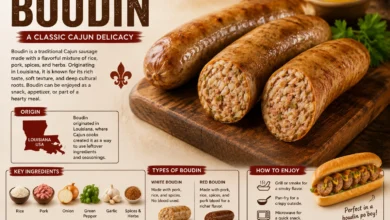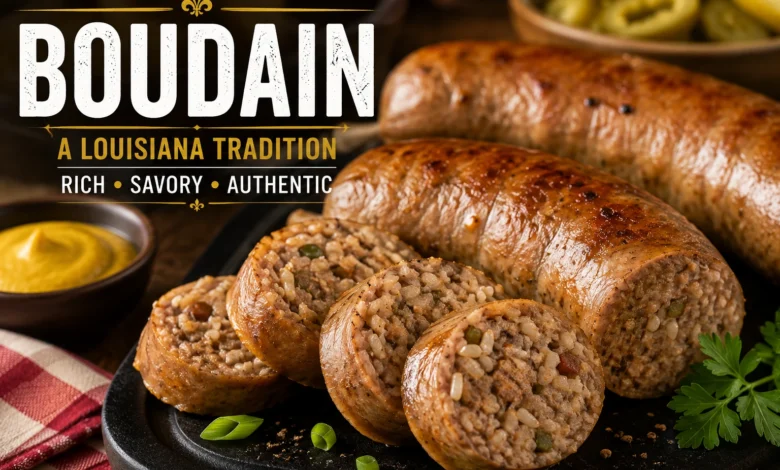
Boudin is a traditional Louisiana Cajun sausage made with cooked pork, rice, aromatic vegetables, herbs and bold seasonings. Sometimes written as “boudain,” this popular Southern specialty is known for its soft, savory filling and distinctive combination of meat, rice and spices. Traditional pork boudin may be served in sausage casings, shaped into crispy boudin balls or enjoyed directly as a flavorful filling. Deeply connected to Louisiana’s Cajun food culture, it is commonly prepared for family meals, festivals, roadside stops and community celebrations. In this guide, you will learn what boudin is, which ingredients give it its signature flavor, You can also explore our food guides, recipes and meal ideas for more delicious inspiration. how it is prepared and stuffed, and the best ways to cook, serve and store it.
What Is Boudain? An Overview
Boudain, often spelled boudain, is a traditional Cajun sausage celebrated for its unique blend of ingredients. Originating in Louisiana, this sausage is known for combining pork, liver, rice, and a variety of aromatic spices and herbs. It’s a dish deeply embedded in Southern culinary culture, offering hearty and complex flavors.
The word boudain refers both to the sausage and sometimes to the filling itself. It has a coarse yet tender texture and a spicy kick that caters to bold taste preferences. This sausage is cherished in Cajun homes and street food stalls alike.
While boudain can come in many variations, the basic concept remains consistent: a pork-based, rice-stuffed mixture enhanced with seasonings and aromatic vegetables. Its versatility allows for adjustments in heat and herb choices, making it adaptable to personal tastes.
Core Ingredients That Define Boudain
The hallmark of boudain lies in its well-balanced mix of ingredients. The primary elements include pork shoulder, pork liver or chicken livers, and cooked rice. These provide the fundamental flavors and texture of the sausage filling.
Vegetables like celery, bell pepper, onions, and garlic are finely diced or ground to add moisture and aromatic layers. Fresh herbs such as parsley and green onions brighten the overall profile, while spices like cayenne pepper, paprika, thyme, and oregano lend warmth and complexity.
The combination of these ingredients creates a rich, savory, and satisfying filling that is slightly spicy but beautifully well-rounded. This mix can be modified to accommodate heat levels or ingredient preferences without losing the signature taste.
Preparing the Boudain Filling: Step-by-Step
To create authentic boudain, start by simmering pork shoulder with aromatic vegetables like celery, onions, bell pepper, garlic, and kosher salt for about an hour. This process tenderizes the meat and infuses it with flavor.
Next, chicken livers are added and simmered for an additional 45 minutes until fully cooked. The meat and vegetables are then strained, reserving the flavorful cooking liquid for later use. Finely dicing or grinding the mixture produces the classic chunky yet cohesive texture.
Afterwards, the filling is combined with cooked rice, jalapeños, fresh herbs, and a blend of dried spices including thyme, oregano, paprika, black pepper, and cayenne. The reserved cooking liquid is mixed in until the filling reaches a moist but moldable consistency, ready for stuffing into casings.
Stuffing and Cooking Boudain Sausages
The boudain filling is traditionally encased in hog casings, providing the familiar sausage form well-loved in Cajun cuisine. Before stuffing, the casings are soaked and rinsed to soften and clean them thoroughly, ensuring easy handling.
Using a sausage stuffer, the filling is pushed gently into the prepared casings. It’s important to fill the casing evenly while massaging it to avoid air pockets. Once filled, the casing is tied or twisted every 5 inches to form individual sausage links.
Cooking methods for boudain usually involve poaching in boiling water for about 10 minutes after pricking the casing to prevent bursting. Alternatively, some prefer smoking or grilling their sausages to add smoky notes and a firmer casing exterior.
Delicious Variations of Boudain
Boudain is a versatile dish allowing many creative adaptations. You can adjust the heat by varying the amount or type of peppers like jalapeños or cayenne. Some recipes swap chicken livers for pork liver or even omit liver altogether for a milder taste.
For alternative serving styles, the filling can be shaped into walnut-sized balls, coated in crushed crackers, and deep-fried to produce savory boudain balls. These make excellent appetizers or snack items with a crispy outer bite.
Additionally, smokers favor adding hardwood smoke for extra depth, transforming the classic poached sausage into a rich, flavorful experience. Serving boudain with tangy mustard or Creole sauces further elevates its profile.
The Cultural Significance of Boudain in Cajun Cuisine
Boudain is not just a comforting meal but a cultural pillar in Cajun communities. It represents resourcefulness by using locally available ingredients like pork and rice, staples in Southern kitchens. The seasoning profile showcases Cajun culinary artistry.
This sausage often features at gatherings, celebrations, and festivals, making it a communal dish that connects people through tradition and shared flavors. Its preparation and enjoyment uphold Cajun heritage and social bonds.
Moreover, boudain embodies the blending of French, Acadian, and Southern American influences. Its unique taste and texture offer a window into the history and lifestyle of Louisiana’s Cajun people.
Tips for Making Perfect Boudain Every Time
Consistency in texture is key for exceptional boudain. Use a reliable meat grinder or food processor to finely dice the cooked pork and vegetables, aiming for a coarse yet uniform mixture. Avoid over-processing which can make the filling mushy.
Maintaining moisture prevents dry or crumbly boudain fillings. Gradually add reserved cooking liquid until the mixture is slightly sticky but not soupy. This balance keeps the sausage juicy during poaching or smoking.
Also, properly prepare the hog casings by soaking and rinsing thoroughly to ensure flexibility. When stuffing, go slowly and massage the casing evenly to prevent bursting. Proper seasoning tasting at the filling stage allows you to fine-tune flavor before encasing.
FAQs
What is the difference between boudain and boudin?
Boudain and boudin refer to the same dish, but the spelling varies regionally. Both describe a sausage made of pork, liver, rice, and spices common in Cajun cooking.
Can boudain be frozen for later use?
Yes, boudain freezes well. Wrap sausages tightly and store in the freezer for up to 3 months. Thaw in the refrigerator before cooking to maintain texture and flavor.
Is boudain typically spicy?
Boudain usually has a mild to moderate heat level thanks to cayenne and jalapeños. However, spice amounts are adjustable to suit personal preferences.
How is boudain traditionally served?
Boudain can be eaten hot after poaching, grilling or smoking and is commonly served with mustard, Creole sauce or simple Southern side dishes. For a party-style meal, it can also be served alongside classic deviled eggs.
Can I make boudain without liver?
Yes, some recipes omit liver for a milder flavor, substituting extra pork or chicken. The texture and seasoning remain important for an authentic experience.
Conclusion
Boudain is a savory celebration of Cajun tradition, combining pork, liver, rice, and aromatic spices in a sausage that delights with each bite. Whether poached, smoked, or fried as balls, its rich flavor and cultural heritage make it a standout dish.
Making boudain at home gives you control over the seasoning, meat quality, and cooking methods, ensuring a personalized and authentic Cajun experience. Its versatile nature invites creativity while honoring a beloved southern classic.
Explore this recipe, savor its layers of flavor, and enjoy a true taste of Louisiana’s culinary heartland with every bite of boudain.